
Praful Bidwai on Prime Minister Manmohan Singh
When Manmohan Singh was sworn in as India's Prime Minister 16 months ago, many regarded him as a political lightweight who got that job entirely by virtue of his proximity and loyalty to Sonia Gandhi. He would long remain under the Congress president's shadow, consult her on every issue, if not take all his commands from her.
Many pundits forecast duopoly: two centres of power, one (Gandhi's) greater than the other; or separation between political and economic decision-making. Gandhi would retain primacy in the first; Singh would dominate the second.
This theory started looking shaky rather early on. Singh hand-picked his team, including Pranab Mukherjee, a known security hawk, and Montek Singh Ahluwalia, a committed neo-liberal with a strong International Monetary Fund-World Bank background. Ahluwalia would be at least as important as, if not more so than, Finance Minister P Chidambaram.
As Planning Commission deputy chair, he would tremendously influence economic priorities and distribution of Central expenditure. Chidambaram, at the end of the day, is a politician, who cannot ignore his constituency. Ahluwalia has no popular constituency.
However, Singh soon dealt another blow to the duopoly hypothesis. He followed Vajpayee in creating a strong Prime Minister's Office, with its own staff. He had definite ideas about who would be in the Planning Commission or head the Indian Council of Social Science Research. He vetoed more appointments than he approved. Soon, Singh quietly started asserting himself in areas such as foreign policy. His style was never confrontational, but beneath the polite, soft-spoken exterior lay a hard-nosed, shrewd persona.
Today, Manmohan Singh has emerged from Sonia Gandhi's shadow. He's his own man, with definite ideas, projects, policies and preferences. He has left his stamp on many institutions. This in part follows the forceful logic of the office he holds. It cannot be otherwise in a Westminster-style democracy, when the Prime Minister does not preside over a collegium, but is pre-eminent - some might say, excessively important. The exercise of power through the Cabinet and its institutions favours the PM. The PMO multiplies the effect, through its managers, fire-fighters and spin-doctors.
So far, this is pretty straightforward. But it?s remarkable that Manmohan Singh leads (if he fully does) a party with no more than 145 seats in the 545-strong Lok Sabha and yet can rule as if he commanded a single-party majority! This is partly explained by the ideologically disparate, fragmented nature of the Congress's United Progressive Alliance partners (mostly regional or Mandal-inspired OBC parties) and "outside" supporters (the Left, Bahujan Samaj and Samajwadi Parties).
Singh has also left a good deal of party-level political negotiation to others, including Sonia Gandhi, while concentrating on governmental politics. Thus, Gandhi as UPA chairperson "handles" the Congress' allies, while being isolated from many areas of policy-making. And Singh extends his influence to areas to which he is relatively new - foreign affairs and security.
The present balance-of-power and division of labour has allowed the PM to exercise disproportionate influence and become increasingly autonomous of Gandhi and the Congress apparatus. His own political personality is becoming clear.
Regrettably, that personality has its angularities and a dark conservative side. Dr Singh came to power on a broad Left-of-centre platform. But his preferred policies are right-of-centre. This is not a pejorative description. Evidence for it comes from a number of decisions attributable to Dr Singh and his confidants.
Take economics. Singh has been content to follow the broad free-market, pro-liberalisation orientation of the National Democratic Alliance - barring the National Rural Employment Guarantee Act, the UPA's single greatest achievement. He has continued with the NDA's macro-economic approach, taxation policies, resource mobilisation and allocation priorities, emphasis on foreign investment, commitment to globalisation, and public sector divestment.
Three of Singh's top priorities are 'labour reform' (read, removal of worker protection through hire-and-fire policies), opening up the retail sector to foreign investment (which could ruin millions of small traders and street-vendors), and reaching trade-related agreements on agriculture and services with the OECD. India compromised on this last at the Geneva ministerial of the World Trade Organisation by breaking ranks with the developing countries' G-21 - in contrast to its firm position at Cancun. India's position at the coming crucial Hong Kong meeting will substantially impact its economy.
Earlier, Dr Singh talked of empowering the underprivileged. Now, he only talks of growth. Thus, in his Independence Day address he said: "If we maintain this momentum of growth (approximately 7 per cent) for the next 5-10 years, then it would be possible for us to eradicate poverty, ignorance, hunger and disease. This is not a dream but something that is possible in our times". This regurgitates the notorious trickle-down theory, which stands belied by India's own experience.
However, it's in the foreign and security policy areas that Singh's conservative influence is starkest. These are precisely the areas from which Sonia Gandhi has kept herself away - because she has been so advised thanks to her "foreign origins". Thus, the decision to sign the June 28 defence cooperation and the July 18 nuclear deals with the US were very much Singh's. As was the September 24 vote accusing Iran of "non-compliance" with the NPT.
By all accounts, Singh was greatly impressed by President Bush's interest in India as an emerging power and "partner". But Singh weighed this so much higher than principle or self-interest - in energy security via Iran and Central Asia, and the larger issue of Asian economic integration. Singh's major right-ward turn could cost India dearly.
It's hard to fault Singh's general policy of befriending China or talking peace with Pakistan. But he has often left its actual implementation to dyed-in-the-wool bureaucrats. Singh has failed to engage Nepal and Bangladesh, or take a secular, pro-democracy approach.
All in all, Singh's policy record is conservative. He has pushed this through so far without a confrontation with the Left or the Congress, except on BHEL divestment. But this may well change with the Iran-US-India triangle. In that case, Singh may have to clip his ambitions and learn to respect coalitional consensus.
Saturday, October 29


Tuesday, October 18
Shall we abolish death penalty?
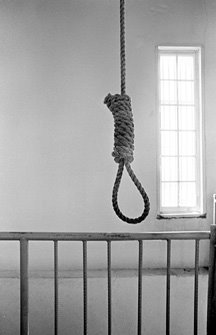 It's the same old question again which noted jurist Fali S Nariman argues is not so much legal or constitutional as is sociological.
 The hangman's noose is again in the news-thanks to the front-page of The Indian Express (October 17). But it has long been on the conscience of legislators, of judges, and of the thinking public, and also (it would appear) on the conscience of President Kalam: his humane stand has a stirred up a controversy. It needs stirring up. The truth is that the death penalty is not so much a legal or a constitutional issue, as a sociological one. It evokes divergent responses in different people-and judges, being human, are no exception: nor are Presidents. There are the abolitionists, and the anti-abolitionists.
In India there has always been a cleavage of opinion. For some (as with our President), it is a matter of conscience. I remember my senior, (Sir Jamshedji Kanga) telling us in the 1950s about a senior District Judge, Mr. Khareghat, who was due to be elevated to the Bombay High Court. In those days the capital sentence could only be imposed by a High Court Judge. Khareghat declined the honour on the ground that he would never be a party to the death sentence: he would rather not be a High Court Judge. (That is why we remember the name of that District Judge!)
The abolitionists have a strong lobby. Recent events in various countries (especially in the developing world) have driven many to the conclusion that murder will never cease to be an instrument of politics until the execution even of proved murderers is regarded as immoral and wrong. In the world of today there are fewer and fewer men condemned to death for murder, and more and more executed for political views.
As long as death remains a permissible instrument of Government, those in power will always justify its use. Besides, (and this is a particularly pertinent point) the hangman's noose ends the search for truth-what if the judge is wrong? The question plagues our consciences. Judgments of Courts can always be recalled and reviewed; execution of sentences of death, never.
I recall what Niall Mardermott, distinguished Secretary General of the International Commission of Jurists, said whilst conveying to the then President of India, ICJ's plea for mercy for Kehar Singh (one of Mrs. Gandhi's assassins) "in the country of my birth (the Republic of Ireland) there is a saying that the grass never grows under the gallows". But President Venkatraman had already made up his mind-and Kehar Singh was hanged.
The main plank of the anti-abolitionists is that the death sentence has a deterrent effect-not by the fear of death, but exciting in the community a deep feeling of abhorrence for the crime of murder. I remember in 1973 when Jagmohan Singh's case was being argued, (where the constitutionality of the death penalty was first upheld) Chief Justice Sikri said, in the course of arguments, that he was certain that if the death penalty were abolished, entire villages in the Punjab would be wiped out in a wave of reprisals! He had been the Advocate-General of that State for many years.
Other Justices from this State and other border States have expressed similar views. How can a deep feeling of abhorrence of the death penalty be sustained, (say the anti-abolitionists), when known and hardened criminals sentenced to imprisonment for life, are set free through paroles and remissions after only a few years of incarceration? They have a point.
What then of the future? In the Oliver Wendell Holmes Lectures delivered in September 1981, Justice Brennan said: "I believe that a majority of the Supreme Court will one day accept that when the State punishes with death, it denies the humanity and dignity of the victim... That will be a great day for our country and our Court". He was speaking about the United States and its Supreme Court of which he was a distinguished member.
There are many in this country who would like to see the Supreme Court of India utter similar sentiments. Perhaps, hopefully, one day, it will-but I venture to predict it will only be when the system of criminal justice effectively ensures that persons who would have hanged but for the constitutional outlawing of capital punishment (like persons guilty of horrendous murders) would not return to society until reformed. Till then, the great question will continue to haunt us all (as it haunts our President): is it really necessary to hang people in order to convince people that killing people is wrong?
Monday, October 17
Children Of The Same God
A prize-winning entry in an annual essay contest sponsored by The Indian Express and Citizens for Peace on the topic "A Secular Rethink" by Shashi Warrier
On a bright winter's morning in Bombay more than two decades ago, my friend Shankar and I stood nervously by an open doorway crowded with grim-faced people, some snuffling, a few weeping, most of them avoiding our eyes. We were on a condolence visit that Shankar had to make: he had dragged me along for moral support. A short while after we arrived, a graying lady caught sight of Shankar from inside. She came out, took his hand, and led us into a darkened, quiet bedroom to meet her younger sister, recently widowed, prostrate from grief. The widow looked at Shankar through bleary, swollen eyes, took his hand in both of hers, and wept a little, wiping her eyes with the end of her white dupatta. She said nothing at all, and neither did we.
The elder sister came for us in a few minutes, taking us to the crowded sitting room, where she handed us cups of cooling tea, and biscuits. She told us of how her brother-in-law had died: he'd been dragged out of a taxicab and butchered to death by a screaming mob, egged on, she said, by Congressman HKL Bhagat.
He was a Sikh, a trader in automobile parts, visiting Delhi on business. He was at the wrong place at the wrong time, and he paid for that with his life. "We never thought anything like this could happen," she told us. "We were part of you. Now..." Her voice trailed away, and neither my friend nor I could find anything meaningful to say. We sat with her for a few more minutes and left, relieved to be leaving.
Another bright winter's morning some weeks later, we met the ladies at a market and stopped to chat. The widow was still getting used to dealing with the large empty space in her life. Grief had made her gaunt, and her clothes hung loose on her. Her face was weathered, her graying hair almost white now. But her back was straight as ever, and the fire in her eyes as bright and strong. Once again she took Shankar's hand, and, this time round, mine as well. "I thought of going to my son, in England," she said, "but decided to stay. This is my home. You are my people. Despite what happened to him. You are my people. Not the English." Strangely, her strength comforted us.
I remembered her when Lakshman Kadirgamar was assassinated. Until a few years ago, we used to think of Sri Lanka as a country where the majority Sinhalese more or less stuck their decisions down minority throats. Along came Mr Kadirgamar, and that began to change. Sri Lanka became more inclusive, more tolerant. The government began to talk to the LTTE, with the Norwegians mediating. And peace, after a fashion, returned to the island nation. Now, with Mr Kadirgamar gone, I wonder where the peace process will lead.
But two little bits of Kadirgamar's thinking, two principles that he spoke of again and again, stick in my mind: first, that he stood for all the people of Sri Lanka, regardless of religion or language; the second, that the LTTE, for all the damage they did, were Sri Lankans, and deserved to be treated as such. Much like the Sikh widow who held my hand twenty-odd years ago.
It's easy to accuse someone like Narendra Modi - or, for that matter, Jagdish Tytler or Bhagat - of being a blot on the country?s fabric. It's easy to appoint committees to look into pogroms of different kinds and come up with nothing. It's harder far to accept that Modi is one of us, just as it's harder far to accept that a separatist shooting down women and children, or letting off a bomb in a crowded market square, is one of us.
The word "secular" in essence just means relating to worldly things as distinguished from things relating to church or religion. In our society, it has acquired this meaning: don't hate someone because they pray to a different god. That's a very narrow meaning, and one that is already beginning to hurt India.
Thanks partly to Modi and others of his ilk, it's now acceptable to hate those who hate those who pray to a different god. Behind a banner of secularism, united only by their need to defeat the BJP-RSS combine, have come together two parties that have been the country?s bitterest political foes since decades before Independence: the Congress and the leftists. Adding weight to this coalition is the RJD, led by Laloo Prasad Yadav, accused of swindling the treasury of many hundreds of crore of rupees, of running his state into the ground in the many long years during which he ruled it, and of many other lesser charges.
The strange thing is that this "secular" front has given itself licence to hate on grounds other than religion. Caste, for instance. Laloo Prasad Yadav has thundered against the "forward" castes, criticising them for being forward. You can discriminate ? nay, hate ? for almost any reason other than religion, and you will get away with it. You might be a serial killer but if you haven't been convicted and are willing to spout hatred against "communal" forces, you're welcome to join the band ruling the country.
Trouble is, this is a government based on hate, just like the BJP-RSS combine. As the days pass, the differences between the UPA and the NDA seem to narrow and dwindle. One of these days, political reality will look more and more like the ending of Orwell's "Animal Farm", where the working beasts gather at the windows of the farmhouse to see the pigs and men sitting together at the table, indistinguishable from each other.
But Mahatma Gandhi more than half a century ago, Kadirgamar rather more recently, and the Sikh widow in between, all in their different ways made the same point that Jesus made a couple of millennia ago: there's no US and THEM, there's only US.
So, what does all this have to do with secularism, this business of us and them? Thinking in terms of us and them is about hate, about bigotry, about prejudice. It's the kind of thinking that has set Kashmir apart from the rest of India. It's the kind of thinking that makes the shopkeeper in Srinagar ask visitors if they're from India, or the village official in Nagaland tell you that his son has gone to college in India.
Secularism must be inclusive, and compassionate. So being secular means not judging another human being. Someone who's a different colour is different, but no better or worse. Someone who worships differently is no better or worse. Someone who preaches a different political ideology is just someone who thinks differently, but is no better or worse. Someone who's wealthier or poorer has more or less money, but is no better or worse.
There's no way to learn this except by doing it. Learning that Hindus and Muslims and Christians are all the same, that they use different words for the same things. That knowledge will free us. But it's wealth, or lack of it, that's at the root of most troubles. Poverty anywhere, on any scale, is a potential source of strife. Ignorance is another. Work on these two, and we're on our way to getting some of our big problems licked.
The question is how. The old slogan, "Think Big", gets increasingly in our way. Thinking big in conditions of widespread poverty, or war, or communal strife, only leads to a feeling of helplessness, of defeat. So think small. Think not of how to clean up the country's roads: instead, pick up a bit of garbage on the road and drop it in a litter bin. Think not of how to feed the country?s millions of hungry children: instead, help the kid on the corner to get a square meal. Mohammed Yunus of Bangladesh did just this: he thought very small. From his thinking small came rural micro-credit and Grameen Bank, a powerful instrument of social change, especially among women, in Bangladesh.
So think small. You and I and millions of others who think small might not end up like Mohammad Yunus, but we certainly can make a difference. We are, after all, children of the same god.
On a bright winter's morning in Bombay more than two decades ago, my friend Shankar and I stood nervously by an open doorway crowded with grim-faced people, some snuffling, a few weeping, most of them avoiding our eyes. We were on a condolence visit that Shankar had to make: he had dragged me along for moral support. A short while after we arrived, a graying lady caught sight of Shankar from inside. She came out, took his hand, and led us into a darkened, quiet bedroom to meet her younger sister, recently widowed, prostrate from grief. The widow looked at Shankar through bleary, swollen eyes, took his hand in both of hers, and wept a little, wiping her eyes with the end of her white dupatta. She said nothing at all, and neither did we.
The elder sister came for us in a few minutes, taking us to the crowded sitting room, where she handed us cups of cooling tea, and biscuits. She told us of how her brother-in-law had died: he'd been dragged out of a taxicab and butchered to death by a screaming mob, egged on, she said, by Congressman HKL Bhagat.
He was a Sikh, a trader in automobile parts, visiting Delhi on business. He was at the wrong place at the wrong time, and he paid for that with his life. "We never thought anything like this could happen," she told us. "We were part of you. Now..." Her voice trailed away, and neither my friend nor I could find anything meaningful to say. We sat with her for a few more minutes and left, relieved to be leaving.
Another bright winter's morning some weeks later, we met the ladies at a market and stopped to chat. The widow was still getting used to dealing with the large empty space in her life. Grief had made her gaunt, and her clothes hung loose on her. Her face was weathered, her graying hair almost white now. But her back was straight as ever, and the fire in her eyes as bright and strong. Once again she took Shankar's hand, and, this time round, mine as well. "I thought of going to my son, in England," she said, "but decided to stay. This is my home. You are my people. Despite what happened to him. You are my people. Not the English." Strangely, her strength comforted us.
I remembered her when Lakshman Kadirgamar was assassinated. Until a few years ago, we used to think of Sri Lanka as a country where the majority Sinhalese more or less stuck their decisions down minority throats. Along came Mr Kadirgamar, and that began to change. Sri Lanka became more inclusive, more tolerant. The government began to talk to the LTTE, with the Norwegians mediating. And peace, after a fashion, returned to the island nation. Now, with Mr Kadirgamar gone, I wonder where the peace process will lead.
But two little bits of Kadirgamar's thinking, two principles that he spoke of again and again, stick in my mind: first, that he stood for all the people of Sri Lanka, regardless of religion or language; the second, that the LTTE, for all the damage they did, were Sri Lankans, and deserved to be treated as such. Much like the Sikh widow who held my hand twenty-odd years ago.
It's easy to accuse someone like Narendra Modi - or, for that matter, Jagdish Tytler or Bhagat - of being a blot on the country?s fabric. It's easy to appoint committees to look into pogroms of different kinds and come up with nothing. It's harder far to accept that Modi is one of us, just as it's harder far to accept that a separatist shooting down women and children, or letting off a bomb in a crowded market square, is one of us.
The word "secular" in essence just means relating to worldly things as distinguished from things relating to church or religion. In our society, it has acquired this meaning: don't hate someone because they pray to a different god. That's a very narrow meaning, and one that is already beginning to hurt India.
Thanks partly to Modi and others of his ilk, it's now acceptable to hate those who hate those who pray to a different god. Behind a banner of secularism, united only by their need to defeat the BJP-RSS combine, have come together two parties that have been the country?s bitterest political foes since decades before Independence: the Congress and the leftists. Adding weight to this coalition is the RJD, led by Laloo Prasad Yadav, accused of swindling the treasury of many hundreds of crore of rupees, of running his state into the ground in the many long years during which he ruled it, and of many other lesser charges.
The strange thing is that this "secular" front has given itself licence to hate on grounds other than religion. Caste, for instance. Laloo Prasad Yadav has thundered against the "forward" castes, criticising them for being forward. You can discriminate ? nay, hate ? for almost any reason other than religion, and you will get away with it. You might be a serial killer but if you haven't been convicted and are willing to spout hatred against "communal" forces, you're welcome to join the band ruling the country.
Trouble is, this is a government based on hate, just like the BJP-RSS combine. As the days pass, the differences between the UPA and the NDA seem to narrow and dwindle. One of these days, political reality will look more and more like the ending of Orwell's "Animal Farm", where the working beasts gather at the windows of the farmhouse to see the pigs and men sitting together at the table, indistinguishable from each other.
But Mahatma Gandhi more than half a century ago, Kadirgamar rather more recently, and the Sikh widow in between, all in their different ways made the same point that Jesus made a couple of millennia ago: there's no US and THEM, there's only US.
So, what does all this have to do with secularism, this business of us and them? Thinking in terms of us and them is about hate, about bigotry, about prejudice. It's the kind of thinking that has set Kashmir apart from the rest of India. It's the kind of thinking that makes the shopkeeper in Srinagar ask visitors if they're from India, or the village official in Nagaland tell you that his son has gone to college in India.
Secularism must be inclusive, and compassionate. So being secular means not judging another human being. Someone who's a different colour is different, but no better or worse. Someone who worships differently is no better or worse. Someone who preaches a different political ideology is just someone who thinks differently, but is no better or worse. Someone who's wealthier or poorer has more or less money, but is no better or worse.
There's no way to learn this except by doing it. Learning that Hindus and Muslims and Christians are all the same, that they use different words for the same things. That knowledge will free us. But it's wealth, or lack of it, that's at the root of most troubles. Poverty anywhere, on any scale, is a potential source of strife. Ignorance is another. Work on these two, and we're on our way to getting some of our big problems licked.
The question is how. The old slogan, "Think Big", gets increasingly in our way. Thinking big in conditions of widespread poverty, or war, or communal strife, only leads to a feeling of helplessness, of defeat. So think small. Think not of how to clean up the country's roads: instead, pick up a bit of garbage on the road and drop it in a litter bin. Think not of how to feed the country?s millions of hungry children: instead, help the kid on the corner to get a square meal. Mohammed Yunus of Bangladesh did just this: he thought very small. From his thinking small came rural micro-credit and Grameen Bank, a powerful instrument of social change, especially among women, in Bangladesh.
So think small. You and I and millions of others who think small might not end up like Mohammad Yunus, but we certainly can make a difference. We are, after all, children of the same god.
Thursday, October 13
'My Land is Healthier'
No pesticide, no chemical fertiliser, no crop losses. Amrita writes about a farmer from Chottiyan village in Sangrur district, who has'nt heard of the term 'organic farming'.
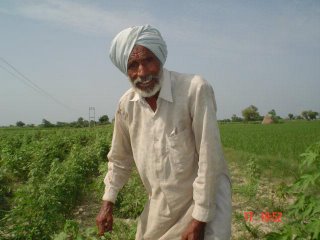 "Meri mitti sab nallon takatwar hai (My land is healthier than all other lands)," Jeeva Singh announces proudly as he plays with a handful of earth.
The source of his confidence lies in knowing what has fed his farm for the past 30 years-or, rather, what hasn't. No chemical fertilisers, no pesticides, no weed-killers. And before you think 'organic farming', no, he hasn't heard of that label either.
Elsewhere, Jeeva Singh would be an oddity. In Punjab, amidst the pesticide-doused fields, crop failures and farmer suicides of the cotton belt, he is a miracle.
It was at the onset of so called green revolution when Jeeva Singh recalls people suddenly started using chemicals for more yield and better pest-resistance "I don't know what it was, but something inside me reacted violently to the idea of poisoning our Mother Earth" he says remembering "The people around me, including my sons, thought I was mad."
Jeeva Singh has never seen anybody showing so much interest in the way he does his agriculture. This is a way of life for him and what he believes in, he explains. He simply depends on conventional farming methods and lets nature guide his crops. His wife and daughter pitch in by deweeding land the old-fashioned way, with their hands.
Even to the casual observer, Jeeva Singh's fields look different from the neat, manicured lands of his neighbours. It's hard to discern much order in the medley of cotton, tinda and maize that grow on his land, but it becomes clear on talking to the farmer that he has a bigger picture in mind.
The basic idea is to keep our own needs in check. He has not joined the blind race for commercialisation and mechanization. He prefers to use a bicycle and tackle various jobs around the farm with his own hands instead of hiring labour, so he prefers to grow what he can look after himself.
And it's not much, he is the first to acknowledge. "I may get slightly lesser yield than my neighbours but because I don't use hired labour or chemicals, my input costs are much lower than theirs" is his common-sensical explanation. Interestingly while the land-holdings of other farmers around have been dropping every year, he has actually been able to add two acres to his original three acres of land.
And as for the feeling of satisfaction that comes from coaxing life out of earth the way nature meant it, it's priceless.

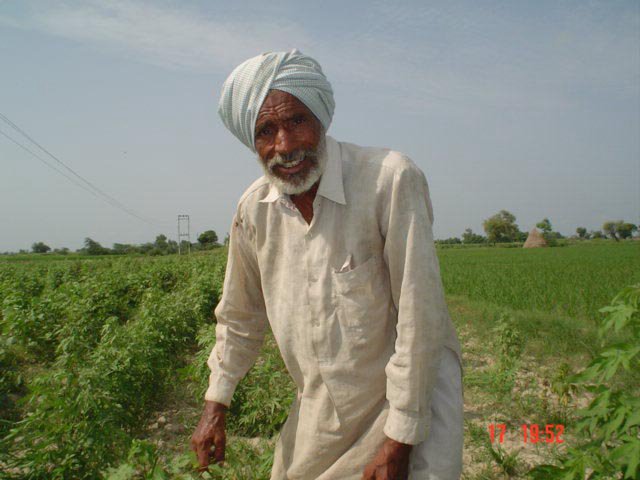 "Meri mitti sab nallon takatwar hai (My land is healthier than all other lands)," Jeeva Singh announces proudly as he plays with a handful of earth.
The source of his confidence lies in knowing what has fed his farm for the past 30 years-or, rather, what hasn't. No chemical fertilisers, no pesticides, no weed-killers. And before you think 'organic farming', no, he hasn't heard of that label either.
Elsewhere, Jeeva Singh would be an oddity. In Punjab, amidst the pesticide-doused fields, crop failures and farmer suicides of the cotton belt, he is a miracle.
It was at the onset of so called green revolution when Jeeva Singh recalls people suddenly started using chemicals for more yield and better pest-resistance "I don't know what it was, but something inside me reacted violently to the idea of poisoning our Mother Earth" he says remembering "The people around me, including my sons, thought I was mad."
Jeeva Singh has never seen anybody showing so much interest in the way he does his agriculture. This is a way of life for him and what he believes in, he explains. He simply depends on conventional farming methods and lets nature guide his crops. His wife and daughter pitch in by deweeding land the old-fashioned way, with their hands.
Even to the casual observer, Jeeva Singh's fields look different from the neat, manicured lands of his neighbours. It's hard to discern much order in the medley of cotton, tinda and maize that grow on his land, but it becomes clear on talking to the farmer that he has a bigger picture in mind.
The basic idea is to keep our own needs in check. He has not joined the blind race for commercialisation and mechanization. He prefers to use a bicycle and tackle various jobs around the farm with his own hands instead of hiring labour, so he prefers to grow what he can look after himself.
And it's not much, he is the first to acknowledge. "I may get slightly lesser yield than my neighbours but because I don't use hired labour or chemicals, my input costs are much lower than theirs" is his common-sensical explanation. Interestingly while the land-holdings of other farmers around have been dropping every year, he has actually been able to add two acres to his original three acres of land.
And as for the feeling of satisfaction that comes from coaxing life out of earth the way nature meant it, it's priceless.

Wednesday, October 5
Community Betrayed
Jatinder Preet
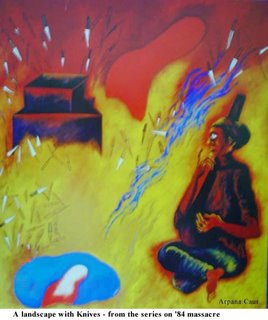
Time is a great healer, they say. While the individual sufferers of carnage against Sikhs in 1984 picked up threads of their lives and carried on, the wounds on the collective consciousness of Sikh community are still festering. To see perpetrators of those wounds going not only scot-free but continue to occupy important positions did not help in the healing in any way. Now come the revelations that the community's own were indulging in behind the scenes machinations that ultimately shamed the justice.
It's sad to see no outrage, not even within the community when investigations by the weekly Tehelka has mentioned specific names, putting under cloud the Sikh leadership.
It seems, though the time has not been able to heal the wounds, but it certainly has made it easier for us to turn our faces the other way. This is what has happened after the report came in. There have not even been murmurs.
Report after report from impeccable credentials named Congress leaders Sajjan Kumar, HKL Bhagat, Jagdish Tytler among others as those who led the massacres of Sikhs after the assassination of the then Prime Minister, Indira Gandhi in November 1984. After much hue and cry enquiries were instituted. The long drawn out investigations came to naught ultimately. The Allurements and intimidations saw witnesses turning hostile one by one. Neither the protectors nor the adjudicators found anything amiss.
The lesser mortals were tired out and the fight to seek justice remained to be led by few. To rightly acknowledge the role of those who have been putting up this fight we have to seek out those who have been responsible in making justice elusive.
We have some of those names now. There is damning evidence against them. Rs 25 lakh was offered to Darshan Kaur who lost 12 members of her family, including her husband, to withdraw her testimony against Congress leader HKL Bhagat. She was offered the money by local Sikh leader and former DSGMC member, Atma Singh Lubhana, a man who had actually been authorised by the Shaheedgunj Gurdwara Committee to help the Tilak Vihar widows with their court cases. Surinder Singh, the head granthi of Gurdwara Pulbangash in New Delhi, the prime witness in case against Jagdish Tytler, went abroad for a year, a week after changing his statement. Prahalad Singh Chandok, then president of Delhi Sikh Gurdwara Management Committee (DSGMC) is named as the one who pressurized the witnesses to say Tytler didn't lead the mob. Chandok even presented a robe of honour to Tytler, for which the Akal Takht, the highest temporal seat of the Sikhs, summoned him but the Takht Jathedar didn't impose a penalty. Another key witness, Satnami Bai when questioned about changing her statement swore by Guru Granth Sahib in the presence of widows and riot victims that it was Atma Singh Lubhana who was instrumental in her turning hostile.
While Sikh leaders like Lubhana and Chandok were instrumental in behind the scene machinations, there were Sikhs who actually voted for Sajjan Kumar and Jagdish Tytler. In fact, both the leaders have been flaunting their Sikh supporters as trophies.
While we are talking of a community here, we have to keep us reminded that we are dealing with humans actually, with all their frailties and weaknesses. The community will continue to have individuals who actually sell off its interests. What's more important is how the community responds to this and ensures that this does not happen.
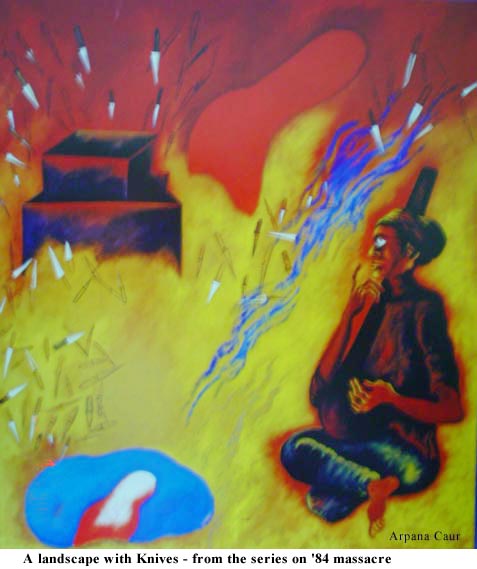
Time is a great healer, they say. While the individual sufferers of carnage against Sikhs in 1984 picked up threads of their lives and carried on, the wounds on the collective consciousness of Sikh community are still festering. To see perpetrators of those wounds going not only scot-free but continue to occupy important positions did not help in the healing in any way. Now come the revelations that the community's own were indulging in behind the scenes machinations that ultimately shamed the justice.
It's sad to see no outrage, not even within the community when investigations by the weekly Tehelka has mentioned specific names, putting under cloud the Sikh leadership.
It seems, though the time has not been able to heal the wounds, but it certainly has made it easier for us to turn our faces the other way. This is what has happened after the report came in. There have not even been murmurs.
Report after report from impeccable credentials named Congress leaders Sajjan Kumar, HKL Bhagat, Jagdish Tytler among others as those who led the massacres of Sikhs after the assassination of the then Prime Minister, Indira Gandhi in November 1984. After much hue and cry enquiries were instituted. The long drawn out investigations came to naught ultimately. The Allurements and intimidations saw witnesses turning hostile one by one. Neither the protectors nor the adjudicators found anything amiss.
The lesser mortals were tired out and the fight to seek justice remained to be led by few. To rightly acknowledge the role of those who have been putting up this fight we have to seek out those who have been responsible in making justice elusive.
We have some of those names now. There is damning evidence against them. Rs 25 lakh was offered to Darshan Kaur who lost 12 members of her family, including her husband, to withdraw her testimony against Congress leader HKL Bhagat. She was offered the money by local Sikh leader and former DSGMC member, Atma Singh Lubhana, a man who had actually been authorised by the Shaheedgunj Gurdwara Committee to help the Tilak Vihar widows with their court cases. Surinder Singh, the head granthi of Gurdwara Pulbangash in New Delhi, the prime witness in case against Jagdish Tytler, went abroad for a year, a week after changing his statement. Prahalad Singh Chandok, then president of Delhi Sikh Gurdwara Management Committee (DSGMC) is named as the one who pressurized the witnesses to say Tytler didn't lead the mob. Chandok even presented a robe of honour to Tytler, for which the Akal Takht, the highest temporal seat of the Sikhs, summoned him but the Takht Jathedar didn't impose a penalty. Another key witness, Satnami Bai when questioned about changing her statement swore by Guru Granth Sahib in the presence of widows and riot victims that it was Atma Singh Lubhana who was instrumental in her turning hostile.
While Sikh leaders like Lubhana and Chandok were instrumental in behind the scene machinations, there were Sikhs who actually voted for Sajjan Kumar and Jagdish Tytler. In fact, both the leaders have been flaunting their Sikh supporters as trophies.
While we are talking of a community here, we have to keep us reminded that we are dealing with humans actually, with all their frailties and weaknesses. The community will continue to have individuals who actually sell off its interests. What's more important is how the community responds to this and ensures that this does not happen.
Subscribe to:
Posts (Atom)
